Blackness in Europe
In an attempt to justify slavery in the 17th century, Europeans used interpretations of Christianity to label Blackness as a sub-human characteristic. Europeans interpreted the Bible as labeling Black people as the cursed children of Ham, who were destined to be servants.
In the 18th century, Black people in France were mostly in the roles of boxers, performers, and servants. As Darwin’s ideas of evolution were adopted in the 19th century, pseudo-science was used to “prove” European superiority and the “primitiveness” of the Black race.
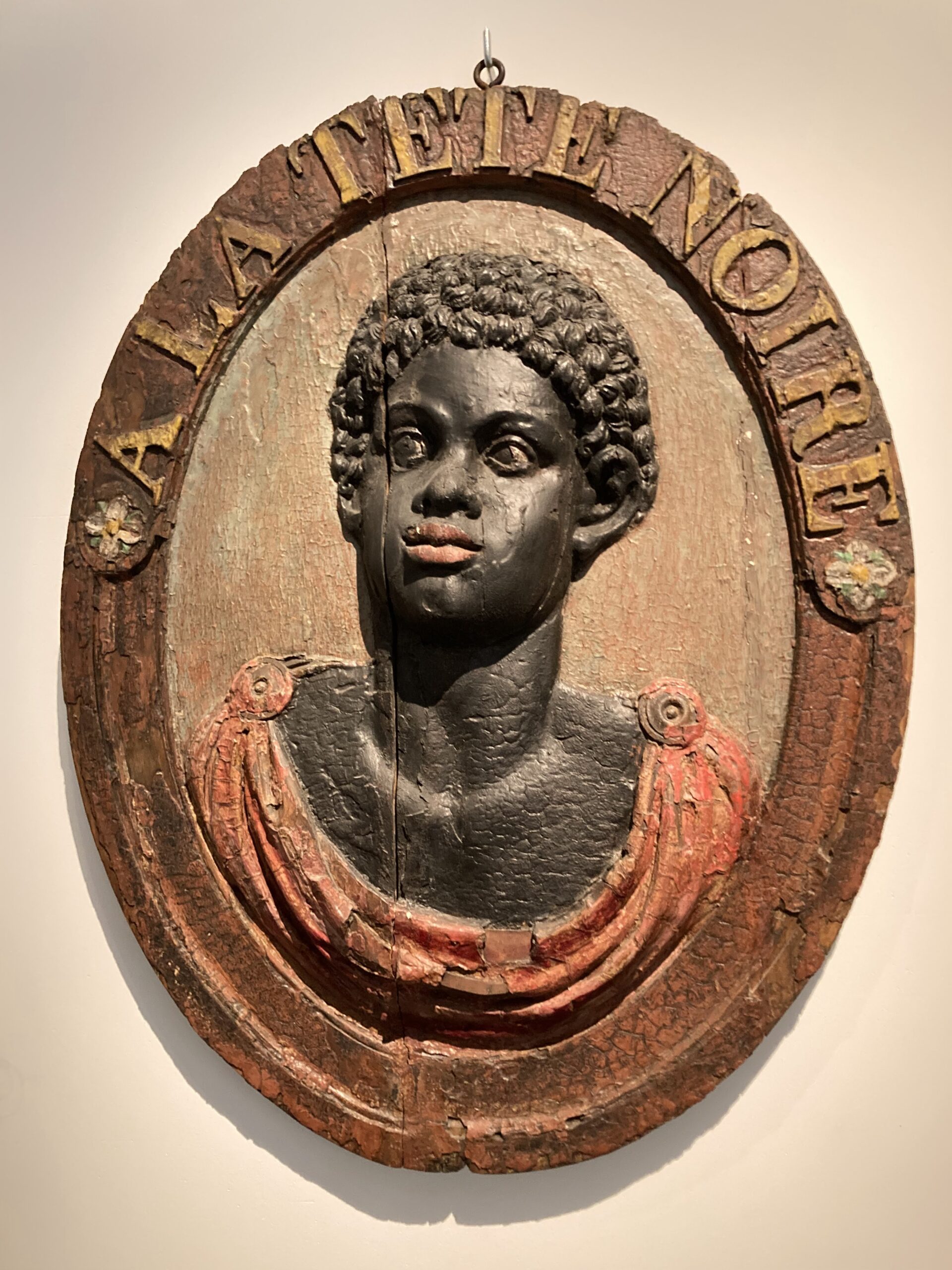
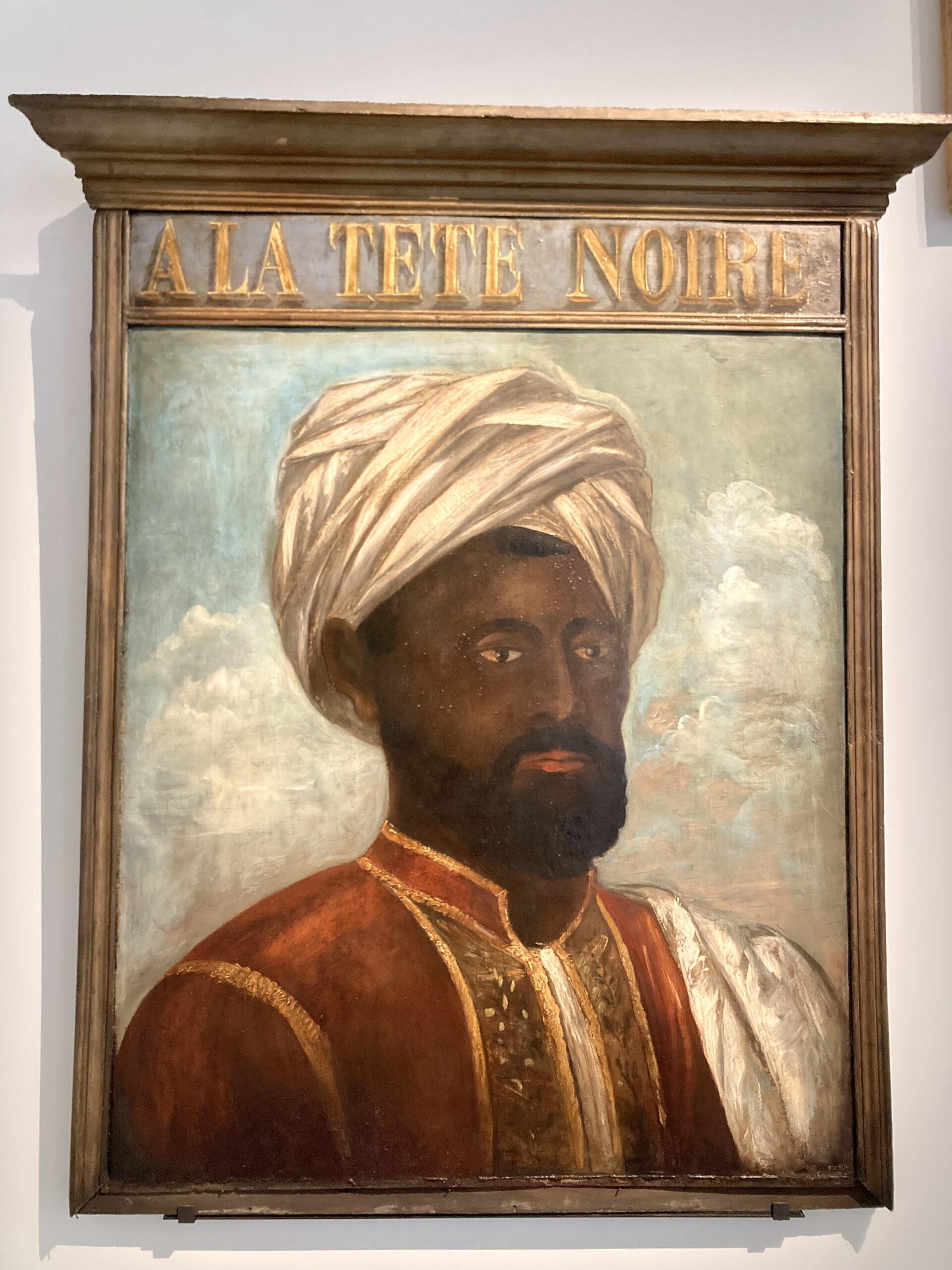
As a means to try to justify slavery in the 17th century, Europeans used Christianity as a way to label Blackness as a sub-human characteristic. Europeans interpreted the Bible as labeling Black people as the cursed children of Ham, who were destined to be servants.
In the 18th century, Black people in France were mostly in the roles of boxers, performers, and servants. As Darwin’s ideas of evolution were adopted in the 19th century, pseudo-science was used to “prove” European superiority and the “primitiveness” of the Black race.
The two pictures above (from the 18th and 19th century) are signs for wine merchants. At the time Blackness was associated through art and advertising with “sin, death, ignorance, sexual deviancy, virility, fecundity” as a way to contrast Black people as less morally pure and educated than Europeans (Archer-Straw, 25-6). The Musee Carnavalet (which houses the pictures above) explains that advertising at the time often used racial stereotypes to sell products associated with nightlife and laziness, such as wine.
American Blackness in France
African American culture first came to France in the form of minstrel shows, creating an extremely characatured vision of American blackness in France. Because of this expectation, Black performers were forced to play into racist stereotypes to become successful in France. Black boxers could become very popular and successful in Paris, but their boxing success was used to reinforce the idea they were savages.
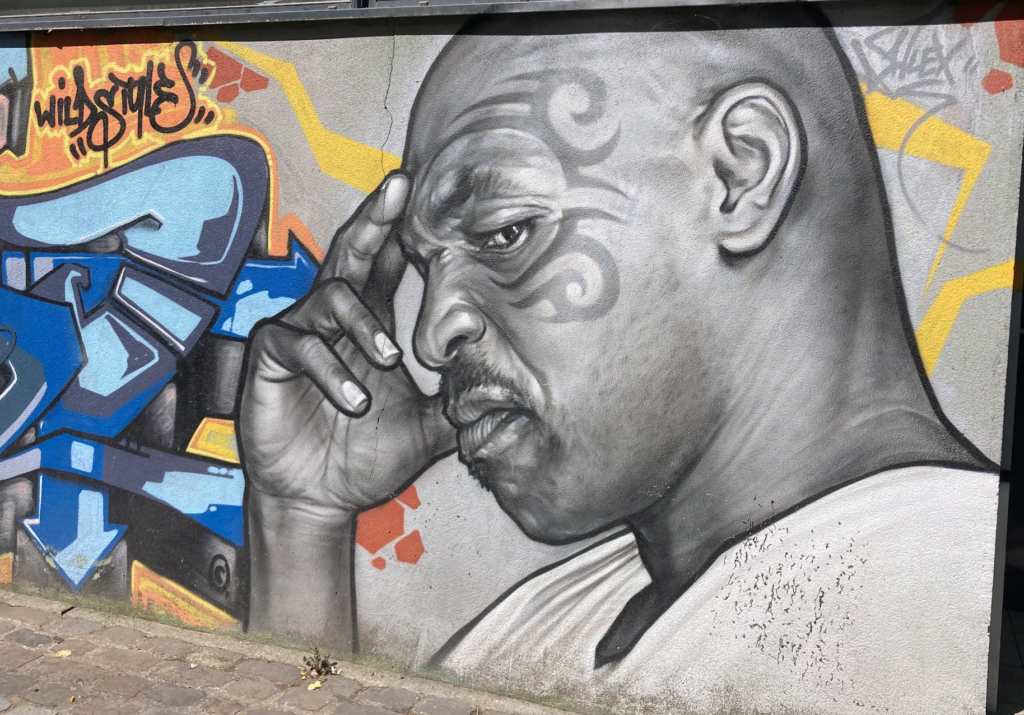
American boxer Mike Tyson as street art in Vitry-sur-Seine in the suburbs of Paris
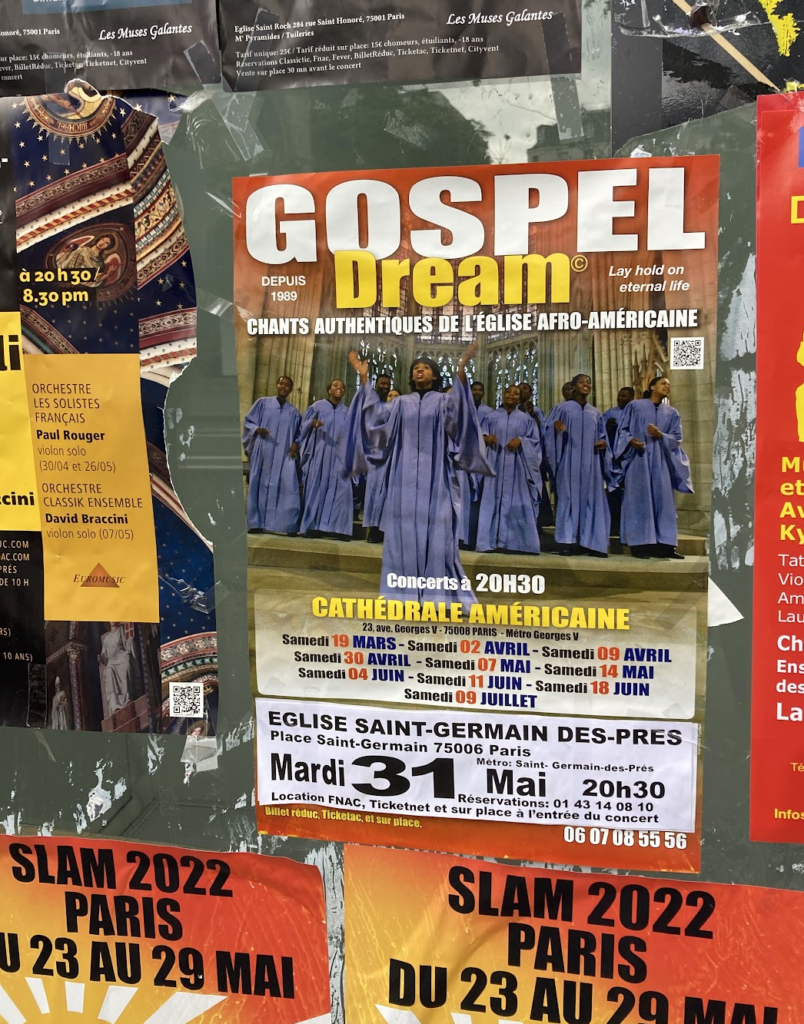
Gospel Dream, “Authentic African American Church Songs”
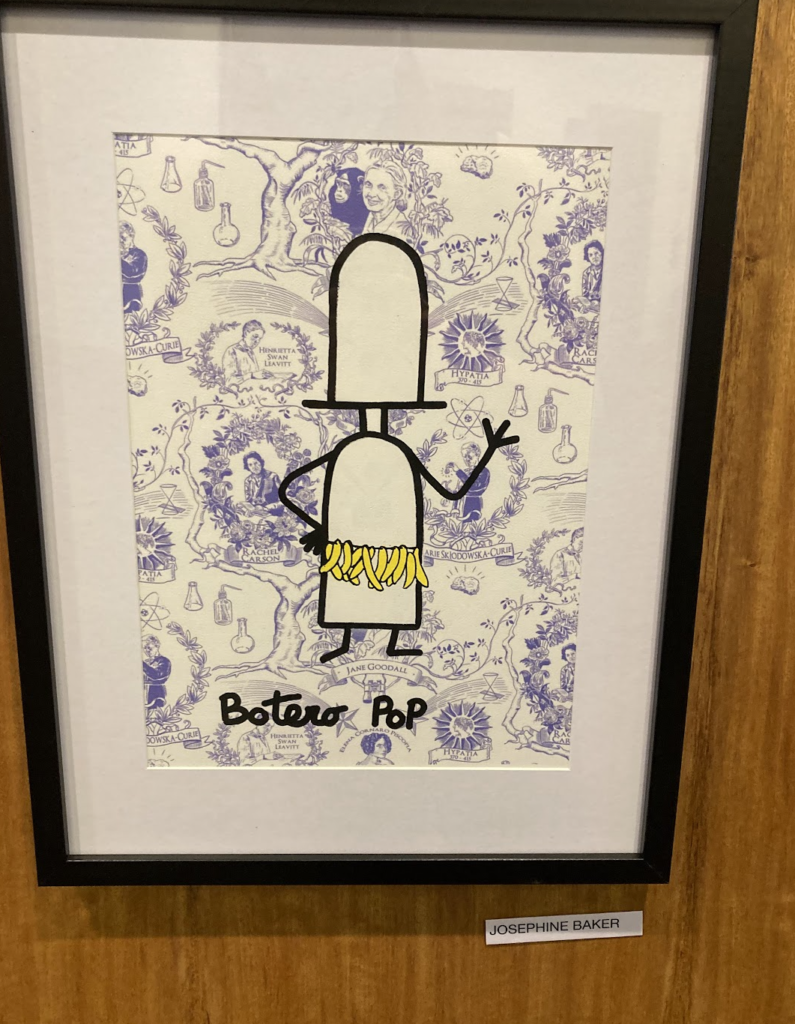
Josephine Baker, recognizable even as a stick figure in her iconic banana skirt
