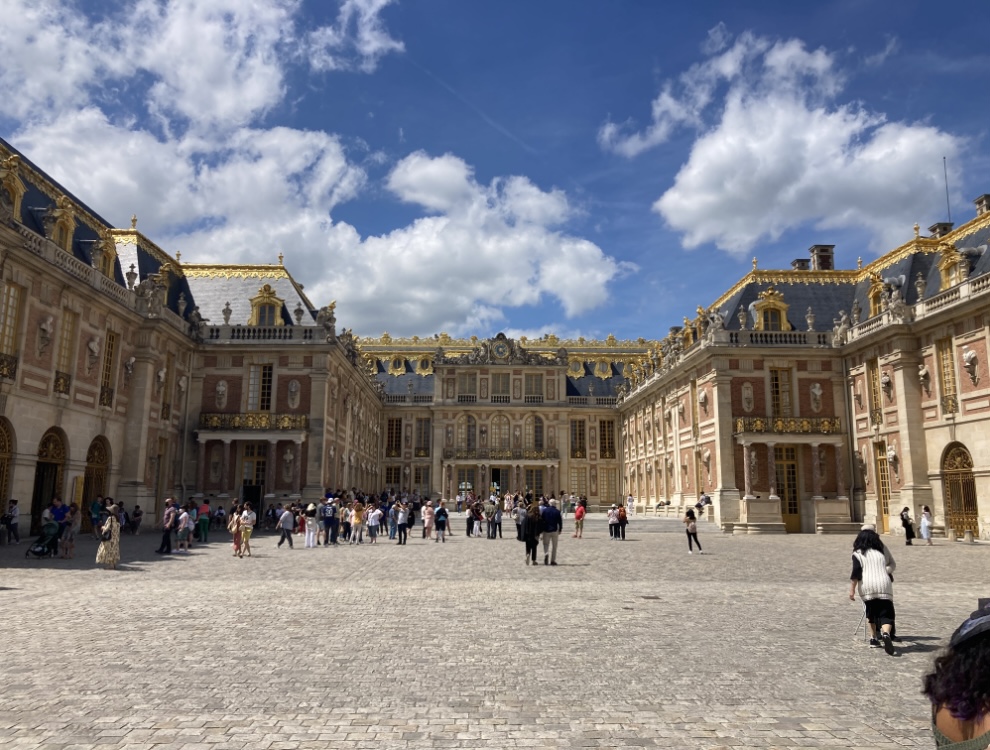
The street is not the capitalist artery that regulates and optimizes movements of bodies, merchandise, and capital, but the space of political construction.
Leopold Lambert, Topie Impitoyable
My research project is an exploration of how refugees, immigrants, and people of color are represented in the public spaces of Paris and how the messages shown in public spaces are policed. I have chosen to focus my research on representations in the public space because these representations create the atmosphere around ideas of race and immigration in Paris, which shapes how individuals experience the city.
In “Of Other Spaces,” Michel Foucault contrasts public spaces with the spaces he coined as heterotopias, spaces that are somehow removed from the public. He explains that public spaces are “freely accessible,” without exclusion and that rites or other forethought need not be performed to enter them. These public places that Foucault describes as “messy, ill-constructed, and jumbled” often have no clear and single function. Precisely because they are open to everyone and do not require specific intent to enter, these spaces have considerable influence and subliminally enforce narratives, shaping the perceptions of all who use public spaces. While we can control our own spaces, and we can often choose if we enter the private spaces of others, public spaces are out of the control of any individual.
Public spaces play a contradictory role in society by serving both as a powerful tool for marginalized groups and a place where the status quo is enforced. Public spaces can allow someone with little structural power can have their message reach a large audience. However, they can also be designed to highlight the narrative the state wishes to enforce, especially in a country like France, where the state is so involved in crafting the way its history and identity are viewed.
In “Topie Impitoyable: The Corporeal Politics of the Cloth, the Wall, and Street,” Leopold Lambert explains that environments determine what is considered the “norm” and what falls outside the norm, rather than these being inherent categories (37). This theory highlights the power of environments, especially public environments (due to wider access), to not only reflect social hierarchies but also create them. In Lambert’s writing, policing and social hierarchies are determined by space not only through the representations put in those spaces but also literally. For example, anti-homelessness architecture such as armrests on benches or spikes in front of buildings is a sign of a wider ideology, a society that does not welcome people who rely on the public space for shelter. This architecture sends a powerful message that this society dislikes these individuals to the extent that they will ensure other citizens do not even have to look at them. It is easy to see how the intolerant idealogy represented by armrests and spikes would lead to violence. However, in his work Lambert argues that architecture does not simply reflect the violence of a society, it is violence itself. Lambert emphasizes the literal violence of architecture, in this case when a body collides with metal in an attempt to lie down.
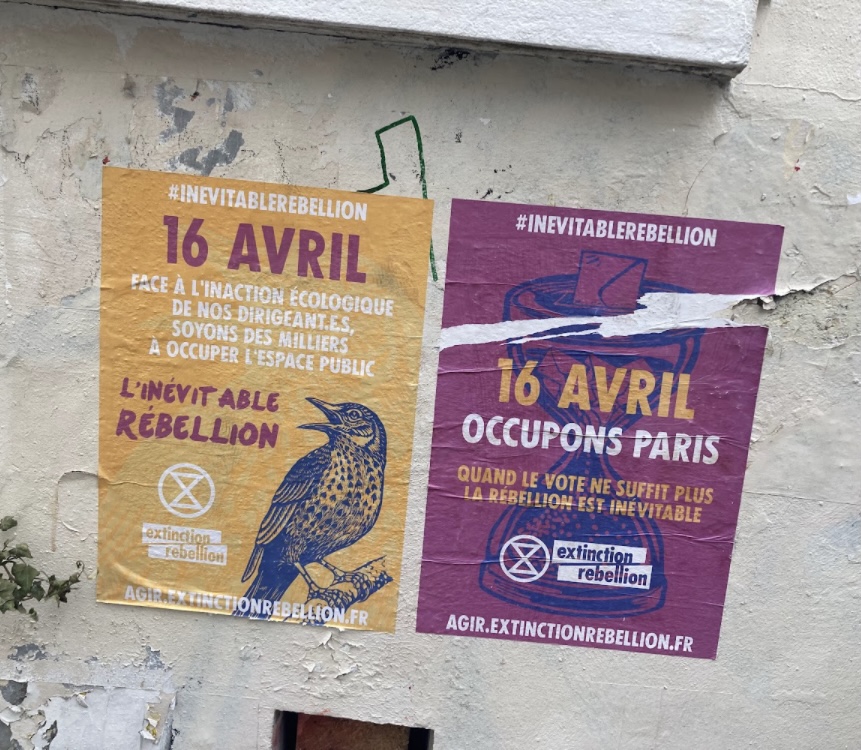
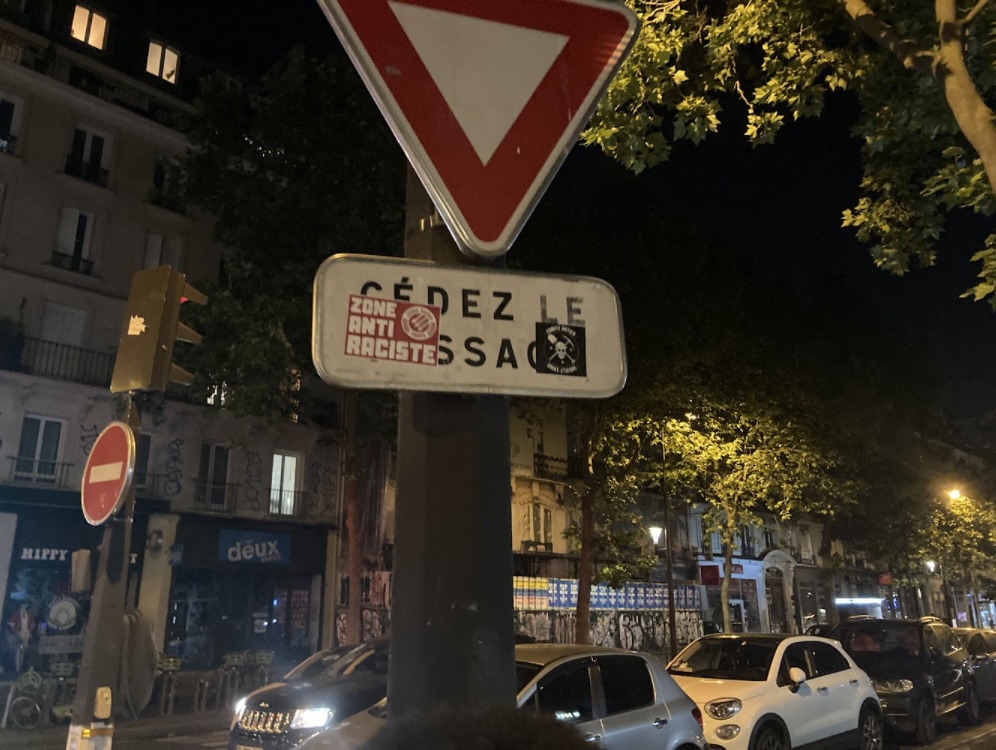
My public space analysis includes mediums like statues, public art, stickers and posters, and advertisements. Along with mediums visible from the streets of Paris, I include museums as public spaces due to the French government’s unique role in the curation of museums. In 2022, France had a culture budget of 4 billion Euros (4.07 billion USD), while the combined federal budgets of the National Endowment for the Arts and the National Endowment for the Humanities in the United States for 2022 was a record high of 381 million USDs. Oversight and funding of museums are very centralized in France compared to the United States. This makes museums a great case study of how the French government hopes to present itself to French citizens and visitors.